Silk Charmeuse
16–22mm momme
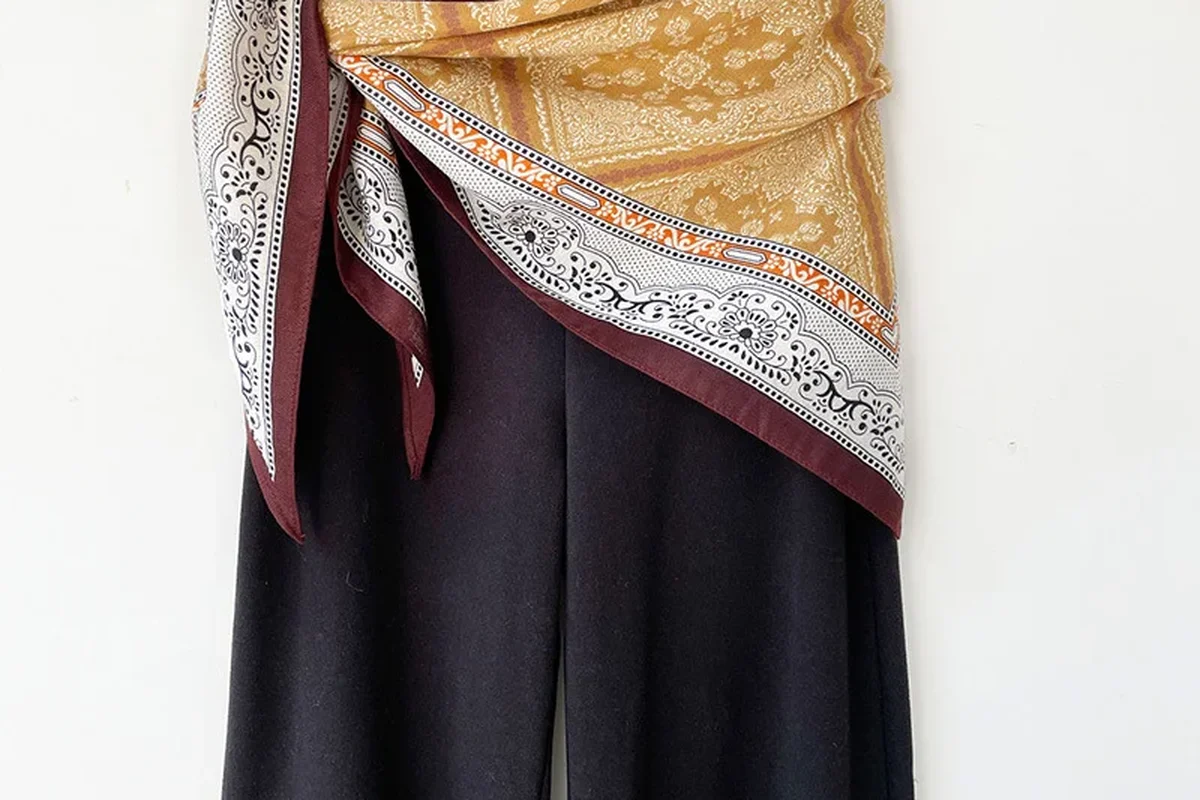
When most people picture traditional silk, they picture charmeuse. The front is a shimmery satin weave, while the back is a flattened crepe — giving the fabric even more drape than crepe de chine. It works beautifully for scarves, blouses and lingerie, and we use it for scarves that call for a fluid, lustrous hand.
Charmeuse for Fluid, Lustrous Scarves
Charmeuse is a strong fit for scarves that need a glossy face, fluid drape and a dressier appearance. It works well for fashion accessories, evening collections and premium gift programs where the surface sheen is part of the product story. Because the fabric moves easily, buyers should review the border, logo scale and fold presentation on a physical sample. Digital printing can reproduce detailed artwork, but the final colour should be checked on the satin face under the lighting used in retail or photography. Confirm the reverse side, hem width, care label and packaging fold before approving bulk production.
Charmeuse on a printed scarf
Charmeuse is a satin weave: the face is glossy and the back is a flattened crepe. That one structural fact decides almost everything about how a printed scarf made in it behaves. The glossy face throws light back at the viewer, which makes colour read deeper and more saturated than the same ink on a matte cloth — and it also means the surface shows every crease and fold.
That is the trade a charmeuse order makes. You get the most luminous colour in the range and a drape that is softer and more fluid than crepe de chine. In exchange, the scarf is a dressier object: it reads as evening or occasion wear, and it wants to be folded rather than crushed.
Because the face is reflective, colour approval should happen on a physical sample under the lighting the scarf will actually be seen in. A colour that looks right under studio light can shift under warm retail lighting, and on a satin face that shift is more visible than on a matte weave.
Specification
The table below is what a quotation is built from. Fixing these lines before you compare supplier quotes is what makes two quotes comparable.
| Specification | This fabric | What it changes |
|---|---|---|
| Momme | 16–22mm | Momme is weight. More weight means more raw silk in the same scarf, so it moves the unit cost more than any other single line. |
| Printing | Digital printing · screen printing | Charmeuse takes digital print with high saturation. The sheen amplifies strong colour and, for the same reason, makes very fine light-toned line work harder to read — check fine detail at final size on the sample. |
| Edge finish | Hand rolled and hand stitched · machine hem | A hand-rolled edge on charmeuse has a soft, rounded appearance because the cloth is fluid. It is the finish most charmeuse orders choose. |
| Format | 90×90cm · 53×53cm · 36×36cm · neck scarf · bandana · pocket square | The 90×90cm square is the classic charmeuse format. A neck scarf uses the drape well; smaller formats lose the effect of the sheen. |
| Packing | Individual bag · branded box · carton mark | Packing is quoted as its own line so that it does not disappear inside the unit price. |
How charmeuse compares
| Weave | Momme | Surface | Choose it when |
|---|---|---|---|
| Charmeuse | 16–22 | Glossy face, matte back | The scarf should catch light and read as a dress piece. |
| Silk twill | 14–19 | Fine diagonal rib, subtle sheen | The design carries the scarf and the cloth should stay in the background. |
| Crepe de chine | 12–16 | Matte, pebbled, identical both faces | A quiet finish is wanted and both sides will be seen. |
If the reverse of the scarf will be visible in wear — a neck scarf, for example — the matte back of charmeuse is worth checking on the sample before you commit.
Buyer questions
What does charmeuse print like compared with twill?
Deeper, more saturated colour, because the satin face reflects light back through the ink. The same artwork on twill reads slightly flatter and more matte. Both reproduce detail well; the difference is in how the surface handles light.
Which charmeuse weight should I choose?
16–22mm is the range. The heavier end drapes more heavily and creases less; the lighter end is softer and more fluid. For a 90×90cm square the mid to heavy end is the usual choice, and for a neck scarf the lighter end works well.
Does charmeuse show creases badly?
More than a matte weave, because the glossy face reflects light unevenly where the cloth is folded. Packing method matters for this fabric — tell us at quotation stage how the scarf will be folded and boxed.
Can the reverse side be printed?
The design is printed onto the face of the cloth. How much shows through to the reverse depends on the weave and the momme, and on charmeuse the reverse is a different surface entirely. If the reverse matters to your product, say so when you choose the fabric.
Minimum order, artwork and lead times
Minimum order is 100 pieces per design. A programme using several designs is quoted as several minimums, because each one is printed and finished separately.
You send whatever you have — artwork, a logo file, a reference, a brand guide, or an idea. We set the repeat, the layout and the hem allowance for your chosen format in charmeuse, and send a digital proof. Nothing is printed until you approve it. Artwork development is part of the project rather than a separate charge.
A physical sample is then printed and finished on the fabric you have chosen, and bulk production follows the approved sample. Bulk runs about 3 weeks after approval.
- What to send us: artwork or a logo file, the format, the quantity, and the fabric weight you want.
- What we send back: a digital proof, then a physical sample on your chosen fabric and edge finish.
- What we need before bulk: artwork approval, sample approval, and the packing method.
- What travels with the order: photographs of the finished scarves before they ship.